How much does a roof replacement cost?
Roofs are priced by the square — 100 square feet of surface. See how pitch, tear-off and material choice move an installed price.
Add to favorites

The numbers at a glance
- Architectural asphalt shingles
- $380 – $620 per square
- Standing seam metal
- $900 – $1,500 per square
- Clay or concrete tile
- $1,000 – $1,800 per square
- Typical residential roof
- 20 – 40 squares
- Waste allowance
- 10 – 20%
How roofs are priced: the square
Roofers price by the square, which is 100 square feet of roof surface — not floor area. Because a sloped roof has more surface than the footprint it covers, the first step in any estimate is multiplying the footprint by a pitch factor, then adding waste.
A low-slope 4/12 roof needs about 5% more surface than its footprint. A 6/12 roof needs roughly 12%, and a steep 9/12 roof needs 25% or more. Steep roofs also slow the crew down, which is why the labour line climbs faster than the material line.
The roofing calculator does this conversion for you and returns the number of squares plus an installed range that already includes tear-off.
Pitch factor — roof surface versus footprint
| Roof pitch | Extra surface vs footprint | Effect on the price |
|---|---|---|
| 4/12 low slope | about +5% surface | Few extra squares, but a low slope still needs a full low-slope underlayment |
| 6/12 medium | about +12% | The most common residential pitch; the price tracks the footprint closely |
| 9/12 steep or steeper | +25% or more | More squares, plus slower and more careful work that drives the total up |
Steep roofs also slow the crew down, so the labour line climbs faster than the material line. Waste is added on top of the pitch factor, never instead of it.
What is included in an installed price
A complete replacement is more than shingles. Most quotes bundle several layers that matter as much as the visible material.
What an installed price includes
| Line item | What it covers | Why it matters |
|---|---|---|
| Tear-off and disposal | Removing one to three layers of old roofing and hauling it away | Roofing over an existing layer hides rot and voids most manufacturer warranties |
| Underlayment and ice-and-water shield | Synthetic underlayment over the deck, plus a self-adhering membrane at the eaves | Stops water pushed back by ice dams and wind-driven rain |
| Flashing | Step, counter and valley flashing at walls, chimneys and valleys | Most leaks start at a flashing detail, not in the field of shingles |
| Ridge and intake ventilation | A ridge vent balanced with soffit or other intake vents | A balanced attic exhausts heat and moisture and extends shingle life |
| Drip edge | Metal edging along the eaves and rakes | Sends water into the gutter instead of behind the fascia board |
| Deck repairs | Replacing rotten or delaminated sheathing found under the old roof | A new roof over a soft deck will not hold fasteners |
| Permits | Local roofing permit and inspections where required | Protects you if the crew is stopped, and keeps a future home sale clean |
Ask for each of these in writing. A low bid is usually a bid that has quietly left one of them out.
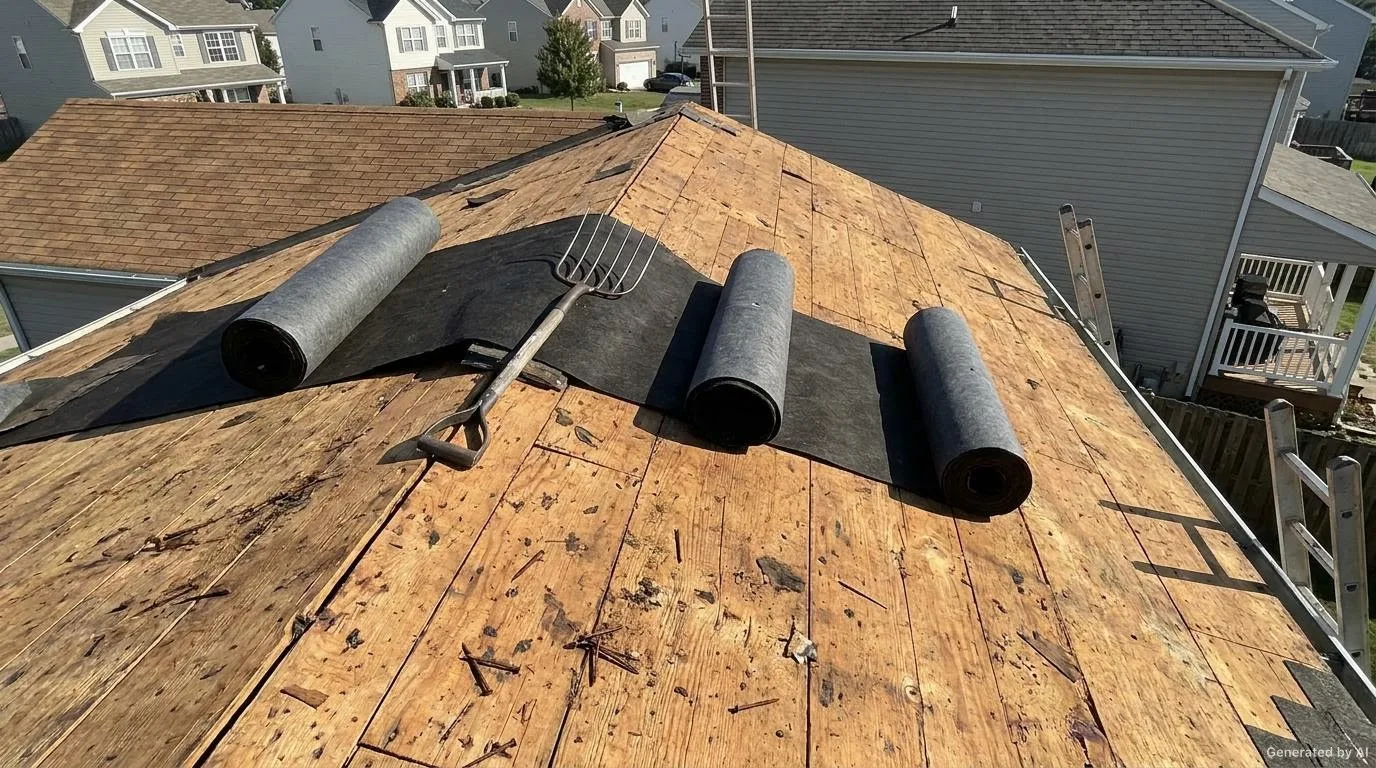
- Tear-off and disposal of the old roof — one to three layers.
- Underlayment, ice-and-water shield at the eaves, and new flashing.
- Ridge venting and, if needed, intake ventilation.
- Drip edge and any replacement of rotten deck boards discovered underneath.
- Permits, where the local authority requires them.
Choosing a material
Architectural asphalt shingles dominate because they balance cost, lifespan and installation speed. Metal and tile cost several times more but can last two to three times as long, so the right choice depends on how long you plan to stay.
If you are not moving, a metal or tile roof can be economically sensible even at a higher price. If you are selling within a few years, asphalt is usually the better return because a buyer will not pay the full premium for a roof they cannot see yet.
Installed cost by material
| Material | Installed cost per square | Expected lifespan |
|---|---|---|
| Architectural asphalt shingles | $380 – $620 | 25 – 30 years |
| Standing seam metal | $900 – $1,500 | 40 – 70 years |
| Clay or concrete tile | $1,000 – $1,800 | 50 years or more |
Ranges are installed cost per square including tear-off. Metal and tile run two to three times asphalt, but often last two to three times as long.
A worked example: 2,000 sq ft footprint on a 6/12 pitch
This is the shape of estimate most homeowners see. A 2,000 square foot footprint on a 6/12 pitch is about 22.4 squares of roof surface, and 12% waste brings the order to roughly 25 squares. The first two lines set the quantity; the priced lines below build up the installed total.
2,000 sq ft footprint, 6/12 pitch, architectural shingles
Eight line items, priced at national averages including tear-off.
- Roof surface2,000 sq ft footprint x 1.12 pitch factor
- 22.4 squares
- Waste allowance12% for hips, valleys and cut waste; about 25 squares ordered
- +2.7 squares
- Tear-off and disposalTwo layers of old shingles removed from 25 squares
- $2,100
- Underlayment and ice-and-water shieldSynthetic underlayment plus membrane at the eaves
- $1,350
- Flashing and ventilationStep and counter flashing, ridge vent and intake vents
- $1,450
- Shingle installation labourCrew wages and equipment for a 6/12 roof
- $6,400
- Dumpster and haulingOne 20-yard container, one pull
- $550
- PermitsLocal roofing permit and inspection
- $350
$12,200 — about $488 per square
At $380 to $620 per square installed, a 25-square roof lands near $9,500 to $15,500; this build-up sits in the middle. Tear-off, waste and pitch are the three lines a homeowner can influence before work starts, and they are the three a low bid tends to understate.
Do not skip what is under the roof
A replacement is the only cheap moment to fix attic insulation and ventilation. If the roof deck is already open, adding or topping up insulation costs far less than doing it later — and a poorly ventilated attic is one of the common causes of premature shingle failure.
Run the insulation calculator for your attic area while you have a roofer on site, and ask whether the quote includes a ridge vent that matches the intake vents you actually have.
How long a roof replacement takes
The phases overlap once materials are staged. The waiting is usually weather, not work — rain stops tear-off and shingle sealing outright.
Inspection and measurements
2 – 4 hours
The crew measures the roof, counts the existing layers, checks the deck from the attic and confirms the square count and pitch.
Material delivery
same day or day before
Shingles, underlayment and flashing are staged on the ground or lifted to the roof so nothing is handled twice.
Tear-off
most of day one
Old shingles, underlayment and flashing are stripped to the bare deck and dropped into a dumpster.
Deck repair and underlayment
half a day to one day
Rotten or delaminated sheathing is replaced, then underlayment and ice-and-water membrane go down.
Shingle installation
one to two days
Field shingles run first, then hips, ridges and valleys are cut and closed.
Flashing, vents and final inspection
half a day
Step and counter flashing, the ridge vent and drip edge finish the roof before a walk-through and a magnet sweep for nails.
Most residential asphalt roofs are torn off and replaced in one to three days, weather permitting. Metal and tile take longer because the material is heavier and each panel or tile is slower to set.
The six most expensive roofing mistakes
Each of these shows up on real roofs, and each one costs more than the step that was skipped to save it.
Layering new shingles over the old roof
A second layer adds dead load, hides rotten decking and voids most manufacturer warranties. The tear-off you avoided is the one that would have exposed the problem.
Skipping attic ventilation
A roof with no ridge vent or no matching intake vents traps heat and moisture. That cooks the shingles from below and shortens the life of the whole roof.
No drip edge or ice-and-water shield at the eaves
These are the cheapest parts of the job and the first line of defence at the edges. Leave them out and wind-driven rain and ice dams find their way in at the eaves.
Choosing a material on price alone
The cheapest per-square number ignores lifespan. Metal and tile cost more up front but can outlast asphalt two to three times over, which changes the cost per year.
Ignoring rotten deck boards
New shingles will not hold fasteners to a soft or delaminated deck. Replacing bad sheathing is a small line item now and a full re-roof later.
Paying a large deposit up front to an unverified contractor
A big deposit before any work, an unlicensed crew or no proof of insurance is how homeowners lose money. Verify the licence and insurance and keep payments tied to progress.
Pre-project checklist
Print this and run through it before you sign anything.
- Measure the footprint and confirm the pitch factor the roofer used.
- Count the existing layers of shingles — one, two or three changes the tear-off line.
- Ask for the square count in writing, including the waste allowance.
- Confirm the bid lists underlayment, ice-and-water shield and flashing by name.
- Ask how the crew will protect landscaping, siding and gutters during tear-off.
- Check the licence and insurance before signing, and never pay a large deposit up front.
- Ask whether attic insulation and ventilation are in scope while the deck is open.
- Get the warranty terms for both the materials and the workmanship in writing.
Put a number on your project
Roofing Calculator
Estimate roofing materials and labor.
Insulation Calculator
Calculate insulation materials and cost.
Planning estimate only — confirm quantities with your supplier or contractor before ordering.
Frequently asked questions
What is a roofing square?
A square is 100 square feet of roof surface. Shingles are sold by the square, and most residential roofs are between 20 and 40 squares.
How much extra should I allow for waste?
Add 10% for a simple gable roof, 15% for hips and valleys, and up to 20% if the roof has many dormers or penetrations.
How long does a roof replacement take?
Most residential asphalt roofs are torn off and replaced in one to three days, weather permitting. Metal and tile roofs take longer because the material is heavier and installation is slower.
How much does a new roof cost for a 2,000 sq ft house?
A 2,000 square foot footprint on a 6/12 pitch is about 25 squares of roof surface once waste is included. At $380 to $620 per square installed for architectural shingles with tear-off, that is roughly $9,500 to $15,500.
How long does a roof last?
Architectural asphalt shingles last 25 to 30 years, standing seam metal 40 to 70 years, and clay or concrete tile 50 years or more. Attic ventilation matters as much as the material: a hot, unvented attic shortens any roof’s life.
Can a roof be replaced in winter?
Usually yes. Asphalt shingles can be installed above roughly 40 °F, but the sealant strips need warm sun before they bond, so a winter roof may need a return visit in spring. Metal and tile are less temperature-sensitive, and crews in cold markets work through the winter routinely.
Where these numbers come from
Ranges are national averages and assume a licensed contractor, permits and a single-crew schedule. Local labour rates and material prices move the result.
Keep reading
All guidesHow much does soffit replacement cost?
The soffit is the underside of the eave. It costs less than the roof above it and does more for the attic than most homeowners realise.
How much does siding replacement cost?
Siding is priced by the square, a 100 sq ft unit nobody explains. The material is half the invoice; what is behind it decides the rest.
Comparing contractor quotes? Request free quotes and check them against your own estimate — all 27 calculators on the site are free.